Carpet Seam Coming Apart? When It Can Be Repaired and When It Needs Replacement
Yes. In many cases, a separated carpet seam can be repaired without replacing the carpet.
The best candidates for repair have two intact carpet edges, sound backing, and little or no fibre loss. If the surrounding carpet is loose, badly frayed, water-damaged, or missing material, the job may also require stretching or patching.
A repaired seam may still be visible. Carpet type, pile direction, fading, lighting, and previous damage all affect how well it blends. The goal is to create a secure, durable joint and prevent further damage.
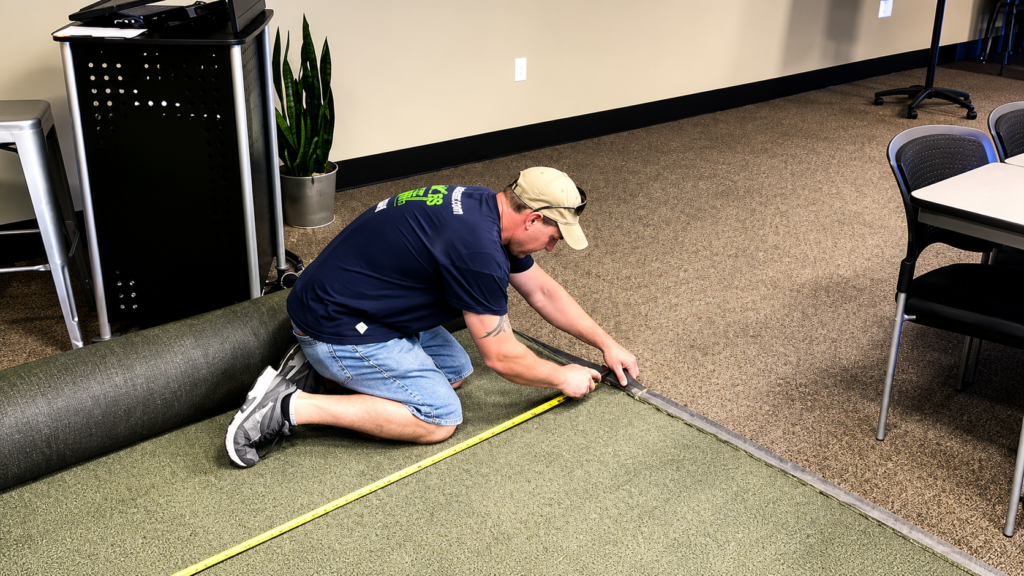
Does Your Carpet Seam Need Repair?
A visible line does not always indicate a failed seam. Properly installed seams can remain noticeable, particularly in strong side lighting or on short-pile carpet.
The seam should be inspected if it has opened, lifted, started fraying, or moves when walked on.
| What you notice | What it may mean | Recommended next step |
|---|---|---|
| A closed line visible from certain angles | Normal seam visibility | Monitor it |
| A gap between two intact edges | Failed seam bond | Have it assessed for re-seaming |
| A raised or curled edge | Loose seam or tension problem | Reduce traffic and arrange a repair |
| A ripple leading into the seam | Loose carpet | Check whether stretching is needed |
| Frayed fibres or loose loops | Edge damage or material loss | Avoid a rotating vacuum brush and arrange an inspection |
| Missing carpet along the joint | Insufficient material for re-seaming | Ask about a bonded insert or patch |
| Moisture, staining, or odour | Possible damage below the carpet | Address the water source first |
| Several failed seams or brittle backing | Wider installation or material failure | Compare repair with replacement |
What to Do Before the Repair
Avoid pulling the edges apart or trimming loose fibres. Do not apply household glue, construction adhesive, or double-sided tape. These products can harden the carpet, contaminate the backing, and make a professional repair more difficult.
If loops are coming loose, avoid vacuuming the area with a rotating brush. Reduce foot traffic and temporarily protect any raised edge that creates a tripping hazard. Do not apply tape directly to the carpet face.
Take photographs from two distances:
- A close-up showing the seam edges and any fraying
- A room-wide photograph showing nearby walls, doorways, transitions, and ripples
When requesting an estimate, include the approximate seam length, the carpet’s age, any history of water exposure, and whether matching leftover carpet is available.
How a Separated Seam Is Repaired
The correct repair depends on how the carpet was installed. Residential carpet may be stretched over cushion and tack strip, glued directly to the subfloor, installed using a double-glue system, or manufactured with an attached cushion.
For a typical stretch-in installation, the technician may:
- Open and inspect the affected area.
- Remove the failed seam tape or contaminated material.
- Trim and seal the carpet edges where appropriate.
- Position the edges correctly.
- Install new hot-melt seam tape.
- Check the surrounding carpet for movement or loss of tension.
Direct-glue and specialty-backed carpets require different methods. Patterned, woven, and loop-pile carpets may also need construction-specific techniques.
Be cautious of an estimate that promises only to “glue the seam” without identifying the carpet and installation type.
When Carpet Stretching Is Also Needed
Repairing the seam alone may not last if the surrounding carpet is loose. Ripples, waves, movement underfoot, or loose perimeter edges indicate a tension problem.
Stretching may be needed when:
- A ripple runs into the failed seam
- The carpet moves when walked on
- Several parts of the room feel loose
- The seam reopened after an earlier repair
- The carpet has detached from the tack strip
- Excess carpet has gathered near a wall or transition
A power stretcher is normally used to restore tension across a stretch-in installation. A knee kicker helps position the carpet but is not a substitute for proper power stretching when the room has lost tension.
Not every seam repair requires stretching. A localized seam-tape failure in otherwise tight carpet may only need re-seaming.
Learn more about our carpet stretching service.
When Patching Is the Better Option
Re-seaming requires enough intact carpet on both sides of the joint. If the edges have unravelled or material is missing, the seam may not close properly.
When the damaged area is small, a technician may install a bonded insert or carpet patch. Matching leftover carpet is usually the best donor material. Carpet taken from a closet may also work, although fading, wear, pile direction, and pattern alignment can affect the final appearance.
Replacement may make more sense when the carpet has:
- Several failing seams
- Widespread backing deterioration
- Extensive bald spots, tears, or previous patches
- Significant contaminated-water exposure
- Persistent odour or mould
- An inability to hold tension
- A history of unsuccessful repairs
Age alone does not determine whether a carpet is repairable. An older carpet with one clean seam failure may still be worth repairing, while newer carpet with badly damaged backing may not be.
See our guide to carpet repair versus replacement for a broader comparison.
What If the Seam Is Wet?
A wet seam should not be treated as an ordinary separation. Water can affect the carpet face, backing, cushion, adhesive, tack strip, and subfloor.
The correct response depends on the source of the water and how long the area remained wet. Carpet affected by a clean-water source may sometimes be restored when the problem is addressed promptly. Sewage or other contaminated water requires professional handling.
If the source is unknown, avoid contact with the affected area and consult a qualified water-damage professional.
The leak or source of intrusion must be corrected before the seam is repaired. Rejoining carpet over wet or contaminated materials will not solve the underlying problem.
Carpet Seam Repair Cost in Ottawa
As of August 27, 2026, our Ottawa pricing guide lists the following estimated ranges:
| Repair | Estimated price (CAD) |
|---|---|
| Basic re-seaming | $100–$200 |
| Seam-tape replacement or a more complex repair | $200–$300 |
| Seam-peak correction | $150–$250 |
| Multiple seams | $300–$600 |
These figures are estimates, not guaranteed prices. The final cost depends on the seam length, carpet construction, access, furniture, fraying, previous adhesive, and whether stretching, patching, cushion work, or subfloor work is required.
A written estimate should explain:
- The proposed repair method
- Whether stretching or patching is included
- Any furniture-moving charges
- The likely cosmetic result
- The repair warranty
- Conditions that could change the price after the carpet is lifted
See our current Ottawa carpet seam repair cost guide for more information.
What Result Can You Expect?
A successful seam repair should close and secure the joint, prevent further edge loss, and leave the surrounding carpet stable.
The seam may remain noticeable if fibres are missing or the carpet has faded. Short pile, loop construction, pattern alignment, pile direction, and light falling across the joint can also affect its appearance.
Before approving the work, ask what structural and cosmetic result is realistic for your carpet.
Frequently Asked Questions
Does a visible seam mean the carpet was installed incorrectly?
Not necessarily. Carpet seams are not always invisible. A seam is more concerning when it has a gap, overlap, raised edge, fraying, or movement.
Can I glue a separated carpet seam myself?
Household glue is not recommended. The carpet construction and installation method determine which materials and repair process should be used. The wrong adhesive can create a hard spot and interfere with a later repair.
Will stretching close the seam?
Stretching corrects loose carpet, but it does not replace missing fibres or rebuild a failed joint. Some carpets need both stretching and seam repair.
Can a frayed loop-pile seam be repaired?
Sometimes. It depends on how far the loops have unravelled and whether enough intact backing remains. Avoid using a rotating vacuum brush over the area until it has been inspected.
Will the repaired seam disappear completely?
Not always. A repair can be structurally successful even when a faint line remains visible.
Request a Carpet Seam Repair Estimate
Send close-up and room-wide photographs through our carpet-seaming service page. Include the seam length, approximate carpet age, nearby ripples, water history, and whether matching carpet is available.
We can then determine whether the job is likely to require re-seaming alone or a combination of seam repair, stretching, and patching.